
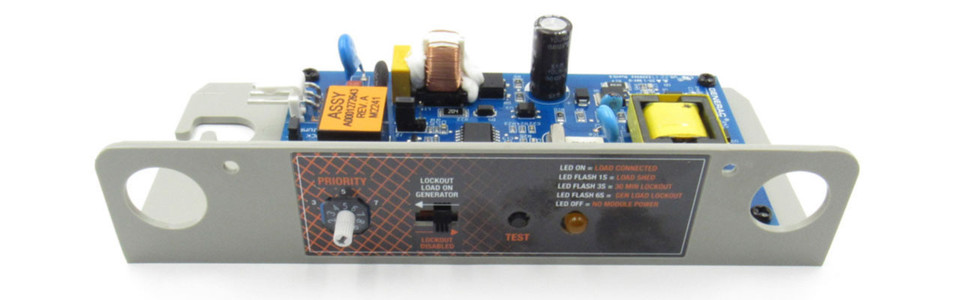
When you own a standby or portable generator, you’re proactively prepared for potential power outages and emergencies. When the thunder starts booming, or the grid starts spiking, you want to know that your home, business, and appliances are all protected. Learning how the intricate components of a generator control board work together and function is the first step to fully understanding your equipment.
But with so many different models out there, where do you start? What does a generator control board really handle? Together, we’ll explore the different types of generator control boards and figure out the right one for your needs.
What is a Generator Control Board?
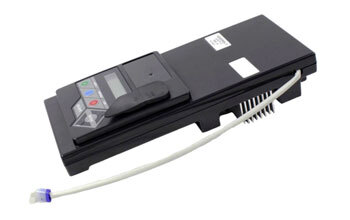 Think of generator control boards (sometimes referred to as a generator controller or genset controller) as the integral brains of the operation. Located within the unit, the control board is responsible for processing specific commands sent from the control panel. With multiple functions related to starting and stopping the engine, monitoring performance, and protecting the equipment from damage, the generator control board is vital to the success of a unit.
The Parts That Make Up a Generator Control Board:
- Main power switch: acts as the main on and off control, in charge of the connection between the generator and the electrical load
- Engine start/stop button: initiates crankshaft and governs the starting or shutdown of the generator’s engine
- Voltage regulator: sometimes abbreviated as the AV, ensures the generator produces a stable and steady output voltage throughout load changes
- Frequency meter: oversees the electrical output frequency of the generator to make sure it stays within a safe and usable range
- Ammeter and voltmeter: measure the current flowing to your devices (ammeter) and the electrical potential in the output (voltmeter)
- Engine gauges: track vital mechanical parameters like oil pressure, battery charge state, coolant/oil temperatures, fuel levels, and trigger shutdowns should the system reach a limit
- Circuit breakers: safeguard the generator and connected appliances from electrical overloads and short circuits by disconnecting the power in a fault state
- Remote control: allows the unit to be started, stopped, and monitored from a distance, only seen in more modern devices
What are PCB Boards?
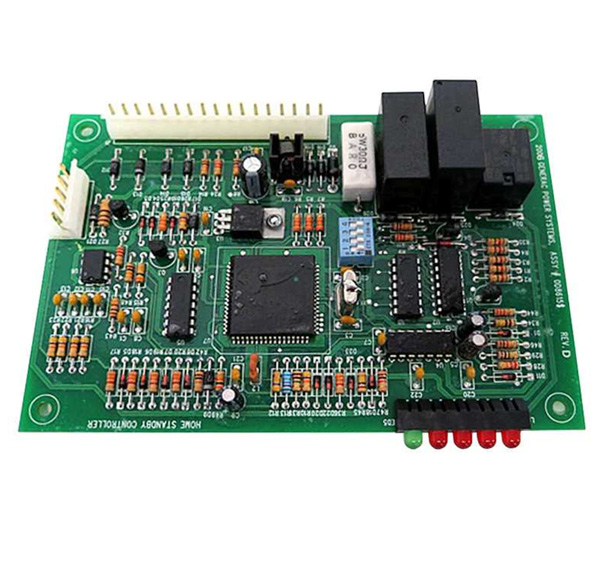 When you shop around for different Generac control boards, you’ll likely come across something called a “PCB board”—but what is it? PCBs, or printed circuit boards, are best described as an early, unfinished stage of the final product.
The bare, physical fiberglass base or PCB contains conductive copper traces and is made to help route electrical signals without any additional messy wiring. The generator control board is the final controller assembly, taking the PCB and soldering on additional electrical components to give it its main function. Though the two terms are often used interchangeably in forums and maintenance requests, you will rarely need to buy the PCB board on its own.
Are Control Boards and Control Panels the Same Thing?
While Generac control panels and control boards work side-by-side, the two parts are not the same thing. The generator control board runs internally with the PCB to process electrical inputs and translate them into operative actions. A Generac control panel is the external user interface that serves as a physical housing for the control board, terminal blocks, and other vital components.
Generac control panels are designed to be accessible and can have buttons, touch screens, or indicator lights, depending on the model. When an operator wants to turn on the system or needs to perform routine maintenance on the equipment, they interact with the Generac control panel first.
What Are the Main Purposes of a Generator Control Board?
Every Generac part has its own functions and responsibilities, and the generator control boards are no different. To put it simply, it is designed to regulate a few key parameters, such as voltage, frequency, and engine speed, needed for the equipment to run smoothly.
When it’s paired with an Automatic Transfer Switch (ATS), the generator control board also detects power loss. If a Generac control board has the ATS incorporated, it is capable of initiating a startup sequence when the power goes out and safely shutting down the equipment when it is no longer needed.
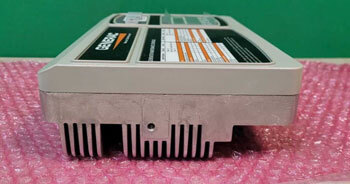 You’ll also notice that many control boards include digital displays on the Generac control panel. These provide real-time data on the generator’s status, making diagnosing potential issues and ensuring the unit functions within safe parameters possible.
More on the Functions of Generator Control Boards:
- Start-up sequencing: Generac control boards manage the ignition process from start to finish, from pre-heating (glow plugs) and cranking the engine to allow for a brief warm-up period to safely preparing the unit to accept an oncoming electrical load.
- Voltage regulation: Generac control boards interact with the Automatic Voltage Regulator (AVR) to ensure power delivered to devices remains steady, proactively compensating fluctuating electrical demands, such as sudden voltage drops or spikes.
- Frequency control: Generac control boards regulate engine speed to maintain the standard 60Hz or 50Hz alternating current frequency required for electronics to function properly.
- Load management: Generac control boards prevent generator overloads when total demand approaches the unit’s capacity by shedding non-essential loads. Depending on the model, they can handle the synchronization and load sharing of multiple generators running in tandem.
- Safety monitoring: Generac control boards continuously ensure the engine and alternator stay within critical parameters, including oil pressure, coolant temperature, battery voltage, and winding temperatures. If parameters breach safe limits, the controller assemblies immediately trip alarms or shut the generator down.
- Communication and connectivity: Generac control boards rely on integrated interfaces and embedded microprocessors to connect to modern building management systems, helping users monitor performance from mobile apps or remote web dashboards.
- Fault detection and diagnostics: Generac control boards log performance metrics and generate specific error codes to help operators troubleshoot problems and perform preventive maintenance before a mechanical breakdown has the chance to occur.
- Auto-start and stop: Generac control boards monitor utility power and automatically start the generator during grid outages and seamlessly shut it down once grid power is restored.
- Fuel management: Generac control boards track real-time fuel levels using tank sensors, calculate fuel consumption rates, and optimize generator run-times to conserve fuel and extend intervals between refuels.
How Do Generator Control Boards Work?
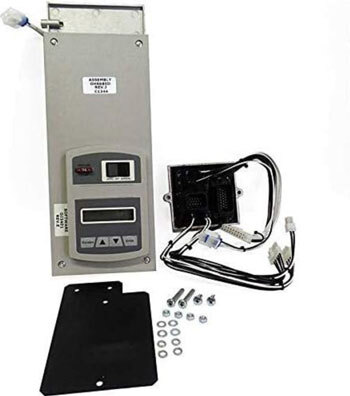 Generator control boards coordinate the machine’s operation through several distinct phases. First, they continuously monitor the unit through sensors on the engine and alternator, tracking the electrical output, engine vital signs, and operational metrics to ensure the system is maintaining appropriate levels. This real-time data is then compared against the model’s programmed safety and efficiency thresholds.
If even one metric is too slow or too high or disaster strikes, the controller assembly (where the microprocessor is housed) will trigger an alarm and initiate the startup sequence. Once power is stable again, the ATS switches power back to the grid, and the control assembly makes time for a cool-down period before safely shutting the unit back down.
Do Portable and Standby Generators Use Different Control Boards?
Just because they function in similar ways doesn’t mean that portable and standby generator control boards are the same, and they certainly aren’t interchangeable. While both are designed to regulate voltage and frequency, the models are made to match the unique requirements of the different types of generators and cannot be swapped.
Since standby generators are more permanent and automated, their control boards require specially made microprocessors. Working hand-in-hand with an Automatic Transfer Switch, these intricate pieces can handle the constant monitoring of utility power and instantly start the equipment when the grid goes down. For more complex standby generators, the Generac control board can also provide additional diagnostic details, like coolant temperature and run hours.
Portable generators, on the other hand, utilize much simpler control boards. Since these units are mobile and are started up by hand, the portable Generac control board is made to focus on manual start-up, essential safety features, and baseline power output delivery. It might seem basic, but that’s all a portable generator really requires.
The 3 Types of Generator Control Boards for Standby Units:
- Automatic Transfer Switch control boards
- Digital control boards
- Load management systems
1. Automatic Transfer Switch Control Boards
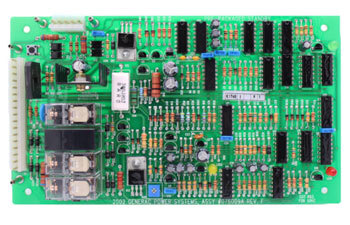 An Automatic Transfer Switch Control Board is designed to work directly with your model’s ATS to automatically switch from the grid to generator power during an outage. In addition to the regular functions of a Generac control board, once the generator is up to speed, the ATS controller assembly safely disconnects your home or appliance from the utility power.
2. Digital Control Boards
Digital control boards are the gold standard for more modern residential and commercial standby units. These designs rely on microprocessors to process equipment diagnostics and handle expected core functions. Able to display real-time engine data on their LCD screens, a digital Generac control board is more advanced, often featuring built-in Bluetooth and WIFI for remote monitoring and alerts.
3. Load Management Systems
If you have a smaller or mid-sized generator that can’t handle powering an entire house at the flip of a switch, you’ll need a load management Generac control board. These parts are designed to monitor electrical draw and prioritize which heavy appliances and/or circuits will receive power when the power goes out. Perfect for preventing overload, this controller assembly automatically sheds non-essential loads to prevent potential stalling.
The 3 Types of Generator Control Boards for Portable Generators:
- Recoil and electric control boards
- Circuit breaker control boards
- Parallel operation control boards
1. Recoil and Electric Control Boards
Portable generator control boards vary in complexity, but the recoil and electric models are the most standard. Serving as the primary human-machine interface for operation, this type of Generac control board lets you turn the engine on and off and features digital displays or gauges for closer monitoring. Electric start versions rely on key turn-starts and battery connection, while recoil models are kicked into gear with a manual pull-start.
2. Circuit Breaker Control Boards
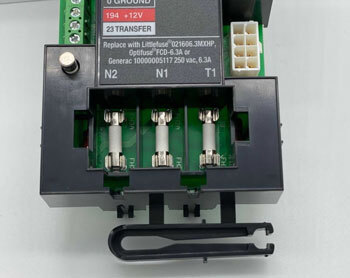 Circuit breaker control boards are a great way to protect both the generator and the connected devices from short circuits and overloads. If an appliance draws too much electricity, the circuit breaker feature will automatically disconnect the power. After the fault is resolved, you simply reset the breaker.
3. Parallel Operation Control Boards
If you want to link two compatible and portable generators together, you’ll need a parallel operation control board. This design allows you to double your overall output by managing the synchronization and load distribution between the two machines to result in a single power source.
How to Choose the Right Control Board for Your Generator
When it comes to finding the right control board for your standby or portable generator, you’ll need to start by assessing your wants and needs. Do you want to upgrade to something that allows you to remotely monitor? Do you want your equipment to automatically or manually start? Once you have these questions answered, you can begin to shop for generator parts.
Mixing and matching Generac control boards into the wrong system can lead to compatibility issues. Before you buy, make sure the part is designed to work with the brand and model of your unit and does not go outside of its expected voltage and amperage ratings. If you’re not sure, you can always contact us for more guidance or use our parts locator page.
How Often Does a Generator Control Board Need to Be Replaced?
Typically, a Generac control board should be replaced every 10 to 15 years. While they’re designed to last longer, many models fail sooner due to environmental exposure, wear and tear, or obsolete technology. If you want your generator to last, making upgrades to the PCB and controller assemblies is necessary.
Signs It’s Time to Replace Your Generac Control Board:
- Display problems
- Erratic behavior
- False alarms
- Unstable voltage
- Unresponsive inputs
At Generator Magic, we’re here to help you power up whenever you need to. Whether you’re looking into a replacement controller assembly or just trying to learn everything you can about your new standby unit, you’re on the right track. Now, with a little more knowledge about generator control boards, you can feel like an expert.