
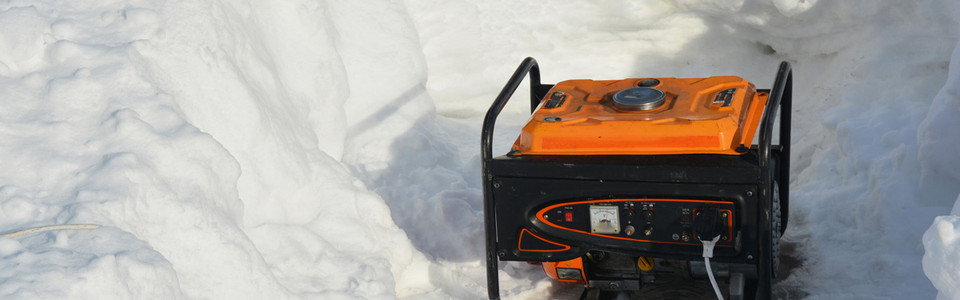
When winter’s worst arrives, will your generator be ready? Snowstorms and cold fronts can strike without warning and take out your power. Your generator can be the lifeline so that you and your family are not subject to the freezing elements, but can it handle a snowstorm?
A generator that is not adequately prepared for the cold and snow can fail when you need it most, so foresight is essential. From guaranteeing good airflow to maintaining your generator battery, proper storm prep is critical in safeguarding your power.
Why is it Important to Prepare Your Generator for a Snowstorm?
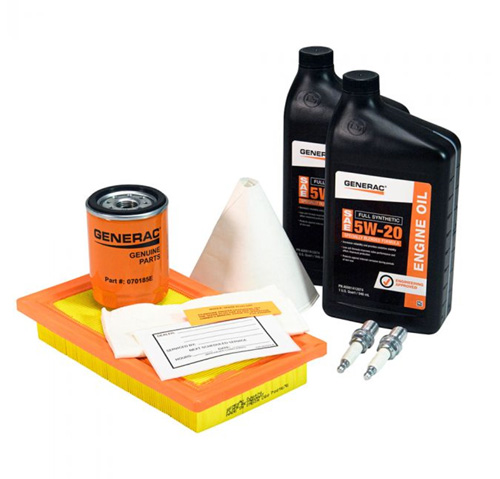 When there is extreme weather, you should be able to rely on your generator to access power. Snowstorms are a common occurrence in colder climates, and preparing your generator for one is an important way to ensure that you, your family, and your loved ones stay safe.
Snowstorms can cause power grids to fail and generator parts to stop working or freeze, so it is essential to know the procedure to follow if a storm hits. When preparing your Generac generator for a snowstorm, it is essential to consider the prep before the storm hits and the maintenance of the generator while it is operating, as well as following regular generator maintenance.
How to Prepare Your Generator Before a Snowstorm Hits
Several tasks should be followed before considerable snow accumulation starts and the snowstorm hits. It is essential to:
- Elevate your generator
- Clear the surrounding area
- Install wind protection
- Prepare for your absence
- Stock spare supplies
How to Elevate Your Generator
When snow falls, it is recommended to have your generator on a raised platform. This is because your generator will be more protected from falling snow, as it will not be covered on the ground. Snow will be easier to remove on a raised platform, and the generator will generate more airflow.
You can use a raised platform, pedestal, stand, or any other generator-specific and approved device to support your generator. Ensure that it is stable and can support the weight and operation of your Generac generator.
How to Clear Your Generator’s Surroundings
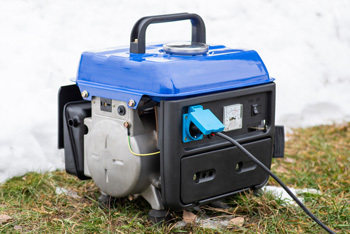 Clearing the surroundings of your generator is also essential in guaranteeing airflow and the safe operation of your generator. Before the snowstorm hits, spend time clearing ice and snow from around the generator enclosure. Ensure that it is cleared three feet around the perimeter of the enclosure- this will give you the safest and most effective generator operation.
How to Install Wind Protection for Your Generator
High wind speeds in a snowstorm can freeze your generator parts or even cause some parts to come loose. Wind can also sweep more snow into the generator area, which is never ideal. This is why it can be wise to protect your generator by installing wind protection at a regulated distance from your system.
Many different types of windbreaks can be used for generators. You can build a stable structure that still allows airflow or use any other methods to prevent wind, even making a type of windbreak wall that is used for outdoor farming. However, whatever you utilize for your wind blocker must be placed at a safe distance of at least three feet away from your generator.
Safety note: Never run your generator in your home or in an enclosed space like a garage, shed, or basement, as it can lead to carbon monoxide poisoning.
Preparing Your Generator to Run While You’re Absent
When preparing your generator for a snowstorm, you should recognize that there may be times during the storm when you will not be around to monitor your generator. There are a couple of different ways to deal with keeping your generator in good working order in your absence:
- Have a trusted neighbor or friend check in on the generator
- Turn the unit off and remove the 7.5-amp fuse
- If you plan to be gone longer than 90 days, follow the “remove from service” section of your Generac generator owner’s manual
What Generator Supplies Should You Stock for a Snowstorm?
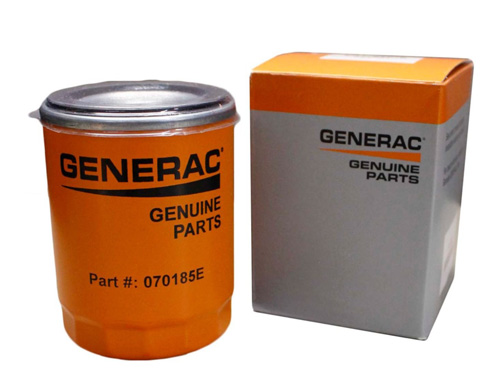 Stocking extra supplies and choosing the right generator parts before a snowstorm can increase your preparedness in case a generator part breaks. These parts can include oil, oil filters, fuel, fuel filters, and air filters. You may also consider keeping extra Generac generator maintenance kits on hand for regular upkeep.
The oil levels of your generator should be checked every 24 hours of operation, topping up with oil when necessary. The importance of generator oil filters is massive, as they keep your oil and engine clean so that it runs at maximum efficiency.
Air filters must also be kept in extra stock because they are the primary line of defense so that dust and debris don’t get into your system. Especially when high winds are blowing, keeping extra air filters on hand is a good idea. You’ll also want to have access to a fresh fuel supply and keep it stabilized in your fuel tank with a fuel stabilizer – a measure you should take when preparing your generator for a snowstorm.
How to Care for Your Generator During a Snow Accumulation
As snow accumulation starts to increase, you can take further steps to ensure that your generator is protected and operational during a snowstorm. These steps should include:
- Remove ice
- Maintain your generator’s air filter
- Maintain generator airflow
How to De-Ice Your Generator
Snowstorms and ice storms can cause parts of your generator to freeze and clog your system. To prevent this and remove ice, fully clear the surrounding area of the generator and the intake and exhaust. By clearing ice from the intake and exhaust pipes, your generator will be able to operate freely. It is also essential to check that the generator’s air filter has not iced over and remains clear and dry.
How to Maintain Your Generator’s Air Filter in Snow
 Your generator’s air filter is important to the system, but blowing snow and debris can fill its airbag with snow and ice. This blockage can drastically affect the effectiveness of your system and its ability to operate reliably. When this happens, take out the generator air filter and clean it.
To do this, remove the air filter and clear out the airbag. Then, take the air filter indoors and let it dry completely before reinstalling. You may want to consider installing a generator breather heater kit or oil heater to prevent freezing and thaw out your air filters, especially if your generator is in a cold location.
How to Maintain Your Generator’s Airflow
Generator airflow is of the utmost importance while in operation. Aside from checking the exhaust and intake and ensuring that the air filter is in good condition, removing any obstacles near your generator is essential.
Clear snow, ice, and any branches or debris that may have blown toward your generator during snow accumulation. It is important to regularly do this while your generator is operating, including looking out for potential hazards that have not impeded the generator’s space yet.
Your Generator’s Battery During a Snowstorm
Your generator’s battery is responsible for kickstarting your system and making it operational. That being said, cold weather can drastically affect your Generac generator battery.
When the weather drops, the chemicals in your battery that cause reactions needed to produce electricity lower. With a lower number of reactions, the generator battery might not have the energy it needs to start the generator. Understanding how your generator battery operates in the cold can inform your decisions about replacing and maintaining it.
How To Prepare Your Generator’s Battery for a Snowstorm
To ensure that your generator’s battery will start when it gets cold outside, some steps should be taken, including:
- Replace the battery if needed
- Charge the generator battery
- Install a battery warmer
Replacing Your Generator’s Battery
If your generator battery is old or worn, it has a lower chance of starting in the cold. If your battery has not been changed in two to three years, consider replacing your Generac battery with the right Generac generator replacement part. To do this, consult your generator’s owner or diagnostic manual and follow the instructions given.
How to Charge Your Generator’s Battery
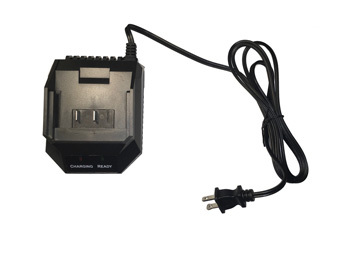 It is essential to ensure your generator battery is fully charged to prepare for a snowstorm. A home standby generator will charge its own battery when connected to the power grid and self-charge when in operation. For a portable generator, however, you should use an external battery charger. It is important to understand your generator battery’s voltage regulator and maintain the voltage of the battery for correct operation.
Connect your battery charger to the wall and then to your generator’s charging port, making sure that the battery is securely attached to the generator. It is recommended that you charge your portable generator battery for 24 hours every three months. Still, you will need to charge it more if your generator is operating more than average.
You may also consider getting a trickle charger for your portable generator battery. A trickle charger constantly charges your generator battery at a low rate to maintain the battery level. By using a trickle charger, your Generac generator battery will not run out of power yet will not overcharge and get damaged.
How to Install a Generator Battery Warmer
Keeping your generator battery warm can increase the number of chemical reactions in the battery and cause it to run quickly, even in cold weather. You may want to consider installing a generator battery warmer for a generator in colder climates.
This can be accomplished by completely turning off your generator and letting it cool down, then removing your generator’s battery according to your Generac owner’s manual. Place the battery warmer according to the manufacturer’s instructions, following proper safety protocols.
After replacing the generator battery, start your generator up and test its operation. Installing a generator battery warmer in your Generac system can be a helpful maintenance tip to prepare for cold weather and snowstorms. If you live in a cold climate, consider investing in a generator battery warmer regardless of snow levels so you can ensure that your generator can start when it is needed.
Your Generator’s Fuel System During a Snowstorm
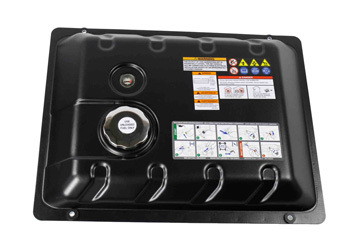 Another element of your Generac generator that can be drastically affected by cold weather and snowstorms is the fuel system of your unit. If your generator runs on propane or a natural gas fuel system, unexpected and uncharacteristic weather temperature drops can impact your system’s performance.
The infrastructure of your generator that runs on propane or natural gas may need to be more robust to support operation in cold weather, particularly if your system is not used to it. Specific generator maintenance steps can be taken to ensure that your propane or natural gas system operates smoothly.
How to Prepare Your Propane Generator System for a Snowstorm
For propane to fuel your generator system, the liquid must be put under pressure in its tank and turned into a vapor. When the weather drops, pressure also decreases, so the propane may not be able to convert to vapor and fuel the Generac generator system.
To help the propane turn into vapor, clear ice and snow from the propane tank and all surroundings, including the regulators, vents, pipes, and valves. Clearing the ice and snow will allow sunlight to reach the tank and heat it up.
Trying to keep your propane tank as warm as possible will increase the pressure and fuel capacities. Despite this, however, never use any artificial sources of heat, like flames or electronics, near a propane tank. Artificial warmth can cause the tank to combust and is very dangerous.
How to Prepare Your Natural Gas System for a Snowstorm
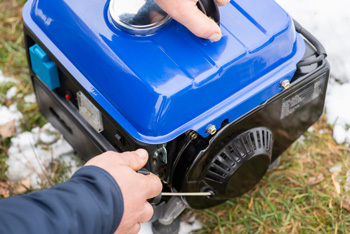 While natural gas systems typically handle low temperatures well, water in the gas stream has a low chance of freezing. While gas companies try to remove as much water from the gas to prevent this freezing, they may be unprepared in climates where cool weather may not be typical. While the chance of this happening is very low, keeping yourself informed about the possibilities of freezing in frosty weather is ideal.
Preparing your generator for a snowstorm is not just a precaution; it’s a necessary step in ensuring the protection and safety of you and your loved ones in extreme winter weather. From elevating your generator to caring for the propane tank supplying your generator, these preventative measures can make all the difference when a storm hits. By taking the time to stock your supplies, secure your fuel, and follow a proper maintenance routine, you will be ready to face the harshest winter conditions.